| |
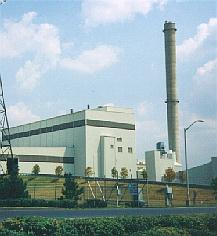 INCINERATORS make waste more toxic and ... INCINERATORS make waste more toxic and ...
 Do not eliminate waste, but change the form of waste into hazardous air emissions and toxic ash. Do not eliminate waste, but change the form of waste into hazardous air emissions and toxic ash.
Convert 30% of the waste burned into toxic ash, which EPA allows to be used as daily landfill cover. Spread hazardous contamination worldwide; contaminating air, soil, and water. Are a major source of 210 different dioxin compounds, plus mercury, cadmium, nitrous oxide, hydrogen chloride, sulfuric acid, fluorides, and particulate matter small enough to lodge permanently in the lungs. |
RESEARCH INFORMATION: For experts on incinerators, contact: Dr. Paul
& Ellen Connett, Ph.D. Chemistry, world renown anti-incinerator activists and founders of Work
On Waste http://www.americanhealthstudies.org/wastenot/, 83 Judson Street,
Canton, New York 13617. (FYI-The Connetts are now concentrating on the fluoride http://www.fluoridealert.org/). Contact: michael@fluoridealert.org or 802-338-5577
Rachel.org (best resource for waste & toxics issues) Rachel's #592 (4/2/98) Incineration News "Incinerators release carcinogenic (cancer-causing) and toxic chemicals from their smoke stacks, including heavy metals (such as arsenic, lead, cadmium, mercury, chromium and beryllium); acid gases, including hydrogen fluoride;[1,pg.11] partially-burned organic material such as polyvinyl chloride (PVC), herbicide residues, and wood preservatives; other organic chemicals, including polycyclic aromatic hydrocarbons (PAHs); and dioxins and furans.[3] One recent analysis identified 192 volatile organic compounds being emitted by a solid waste incinerator.[4] Several PAHs and dioxins and furans are known or suspected human carcinogens. Dioxins were named as "known" human carcinogens by the World Health Organization in 1997.[5] Now a series of reports from around the world have cast even more doubt on the safety of solid waste incineration, further dimming the industry's prospects in the U.S."
DIOXIN webpage from Pennsylvania Environmental Network - "The major source of dioxin in the environment (95%) comes from incinerators burning chlorinated wastes." - BURNING LANDFILL GAS:
BIOMASS: ASH: Once a Pollutant, 'Scrubber Sludge' Finds a Market. The Wall
Street Journal, October 5, 1998, ppB1,B2.
Rachel's #92 (08/29/88): Incinerator Ash is Dangerous Rachel's #22 (04/27/87): Incinerator Ash is Dangerous #85 (07/11/88): Dangers of Special Waste [incinerator ash COAL FLY ASH: Source: Rachel's #20 VIDEO: Michael Thomas Productions The Ash Barge Odyssey (Year 2000)--The remaining 3000 tons of Philadelphia's incinerated ash, which was removed from a beach in Gonaives, Haiti where it was dumped 10 years ago, is now holed-up in a hopper barge in the St. Lucie Canal in Stuart, Florida. A 14-year saga still remains unresolved for the people of Haiti, the residents of Florida and the city of Philadelphia. http://www.michaelthomasprod.com/fla.html
TIRE INCINERATION: SEE - ZWA's Tire Info
Organizations: Global Alliance for Incinerator Alternatives No Incinerator Alliance (Ireland)
GOV'T Information: EPA: Code of Federal Regulations (CFR) Title 40: Environmental Protection / Chapter I: Environmental Protection Agency / Subchapter I: Solid Wastes International Joint Commission (Great Lakes-US & Canada) recommends Phase-Out of Incinerators NOTE: When looking for
information on local recycling and waste disposal, call your
local municipal government. In some cases, the county (or parish)
will be your starting point. For state and federal information on
environmental issues, including solid waste, visit the following
webpage - EPA Regions & State Environmental
Departments
EPA webpage on state combustion rates: 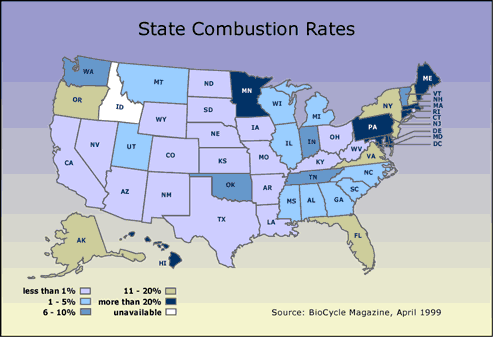
|
Ask for an
Incinerator - Get More Landfills
and Waste Imports
Excerpts from a 1998 e-mail by Lynn
Landes, ZWA: >It is important to keep in mind that waste corporations
are in the business
>of receiving as much waste as possible. If a waste facility
is being proposed for
>your area, you can expect to receive waste imports from other
states and foreign
>countries, as well.
>
>Bucks County, PA, generates about 2,000 tons of waste per
day, but has been
>permitted to received 20,000 tons of waste. Much of that
waste is incinerator ash
>from New Jersey and New York.
>
>In the 1980's, Waste Management Inc., (WMI, now WMX) bought
up about
>6,000 acres in Falls Township and Tullytown, PA. Much of this
property was
>in the floodplain. An old landfill was already on the
property. WMI received a permit from
>the PA Dept.of Environmental Protection (DEP) to build a new
landfill over the old one.
>This is a typical strategy operators enlist in the hope of
escaping liability for ground water
>contamination...by blaming it on the old landfill.
>
>Next, they asked to build a new separate landfill in
Tullytown (part of the
>same land parcel). PA DEP permitted that, as well.
>
>Finally, WMI's subsidiary, Wheelabrator, asked for and
received a permit to
>build an incinerator on the same land parcel as the
landfills. They told the public
>that they needed the incinerator, so that they would
not have to expand their 2 landfills.
>
>Wheelabrator promised to build a monofill for their
incinerator ash. That never happened.
>Instead, they got permission from EPA to use incinerator ash
as daily landfill cover,
>rather than clean soil, which is what they promised the
public.
>
>Since then, Waste Management continued to ask for and receive
landfill expansion
>permits. Although, I haven't kept track of all the latest
developments, I
>estimate that the two landfills are permitted to cover about
500 acres, 240
>feet high. They constitute a mountain range in what
was once a floodplain.
>
>The local citizenry are extremely apathetic. Opposition to
Waste Management
>came from a very few environmental activists, including
myself, who lived in
>adjacent communities. Although we received good coverage by
the local media,
>we were considered outsiders by local politicians and,
therefore, largely dismissed. |
|